- +91 9511117684
- shweta@dataman.in

Top Challenges in Construction Project Management: Key Issues & Solutions 2026
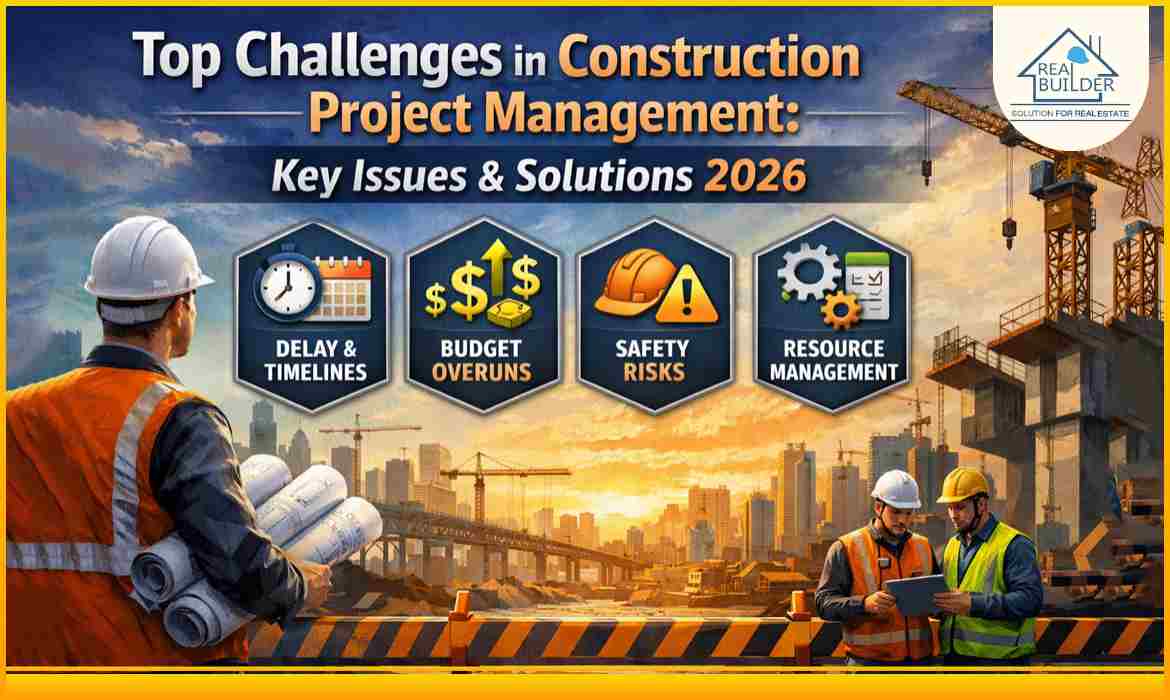
Table of Contents
Post Views: 712
Challenges in construction project management are increasing due to rising material costs, labor shortages, complex regulations, and intricate project requirements. Even small disruptions can lead to delays, budget overruns, or compromised quality, making effective project management essential for construction success.
Even with the use of digital technology tools and modern project management techniques, many construction companies experience issues with bad planning, communication breakdowns, and no visibility of real-time data about their projects.
This blog explains the key challenges in construction project management, their direct impact on business performance, and proven best practices and software solutions that help construction firms deliver projects on time, within budget, and with greater operational control.
What Is Construction Project Management?

Managing construction projects means managing the coordination, planning, controlling, and executing of projects from construction start to finish. The main purpose of managing construction projects is to deliver them on time, within the budget, and according to government rules and Construction regulations regarding safety.
Key Responsibilities of Construction Project Management
- Project Planning/Scheduling
- Cost Estimation/Budgeting
- Resource/Labor Allocation
- Risk/Safety
- Communication/Coordinating With Stakeholders
- Quality Control/Compliance With Regulations
If these responsibilities are not managed efficiently, the organization will incur costs associated with operational inefficiency, financial loss, and recurring construction project management challenges.
Top Challenges in Construction Project Management

1. Cost Overruns and Budget Control Issues
According to McKinsey & Company, nearly 98 % of large capital projects experience cost overruns or schedule delays, with cost increases often far above initial estimates and significant time slippage, underscoring persistent challenges in construction project delivery.
One of the most frequent issues with construction project management is the cost overrun. Unstable labor costs, fluctuating material costs, and scope changes all contribute to uncertain budgets.
The most common causes of a cost overrun are:
- Cost estimators incorrectly estimate during the planning stage
- Too many changes and scope creep in the design
- Poor tracking and reporting of expenses
- Cost of labor & material rising
If strict cost control measures are not implemented, profitable projects can become a financial loss.
2. Project Delays and Ineffective Scheduling
Construction delays create additional expenses, conflicts over contractual obligations, and threaten your business’s reputation.
Common causes of construction delays include:
- Unachievable timelines for construction
- Inadequate task sequence or dependency management
- A lack of qualified laborers
- Delays from permitting or regulatory agencies
- Adverse weather conditions
Ineffective scheduling can lead to wasted resources, rushed work, and reduced quality of construction.
3. Communication and Collaboration Gaps
There are many people involved in any construction project, including architects, engineers, contractors, subcontractors, suppliers, and clients. Poor communication has been the number one reason for construction projects failing.
Communication challenges in construction include:
- Fragmented communications through email or calls
- No centralised location for the documents
- Outdated drawings or conflicting information
- Poor coordination between the site and office teams
4. Risk and Uncertainty Management
Construction projects inherently contain risk. Failure to identify those risks early in the project’s life cycle can have a significant impact on how well the project is executed.
| Risk Type | Examples |
|---|---|
| Operational | Labor shortages, equipment failure |
| Financial | Cost escalation, cash-flow issues |
| Compliance | Permit delays, legal disputes |
| Safety | Workplace accidents, injuries |
Construction companies do not track project risks at an adequate volume, which limits their capacity to respond to risks proactively
5. Skilled Labor and Resource Shortages
The worldwide construction sector is impacted by an acute skills shortage, resulting in decreased productivity and hazards within the industry.
Impact of labor shortage:
- Project delays due to missed deadlines.
- Higher costs associated with labor.
- Lower quality and safety risks.
- Burnout amongst workers.
In order to overcome this challenge, it is necessary to implement effective resource planning and management of your workforce.
6. Data Fragmentation and Lack of Real-Time Visibility
Countless builders utilize spreadsheets, report paper forms, or unlinked applications to create fragmented data that can delay the decision-making process.
Data Fragmentation Problems:
- Reporting inaccuracies
- Approval process delays
- Coordination issues between departments
- Increased inefficiencies and rework
In the absence of real-time visibility, project managers must respond only after issues arise.
Best Practices for Successful Construction Project Management

Recommended Reading: Learn How Construction Inventory Management Software Helps To Save Costs and Prevent Stockouts
1. Improve Cost Management and Budget Control
- Manage costs of construction projects using construction cost control software.
- Create comprehensive budgets with contingency funds.
- Perform routine audits of construction budgets.
- Track the actual costs of construction in real time.
2. Strengthen Project Planning and Scheduling
- Break construction projects into quantifiable phases.
- Utilize advanced scheduling software for construction projects.
- Monitor dependencies among tasks and critical path analysis.
- Track the status of construction through the use of dashboards updated in real-time.
3. Centralize Communication and Collaboration
- Collaborate using cloud-based platforms
- Use a single document to create a complete source of truth for documents
- Conduct daily updates to the site and perform weekly reviews
- Provide real-time access for site and office team members
4. Implement Proactive Risk Management
- Develop and maintain an extensive risk register
- Assess the probability and impact of the identified risk
- Establish contingency plans for identified risks
- Continue to review risks through the project lifecycle
5. Optimize Resource and Labor Management
- Maintain a skills database for personnel
- Distribute resources according to project priorities
- Plan labor scheduling ahead of time
- Invest in training and upskilling for your workforce.
6. Adopt Construction Project Management Software
Construction ERP solutions and software today provide businesses with the tools needed to mitigate typical problems associated with construction management. They do this by allowing for more control, automation, and visibility throughout projects:
- Real-time tracking of costs/budgets
- Automating scheduling/alerts
- Centralized documentation & communication
- Real-time visibility of the project
- More accurate decision-making
The use of digital construction tools by companies has been shown in various studies conducted by top global institutes of construction project management to yield 20%–30% greater efficiency through the timely completion of projects compared to traditional methods.
Business Impact of Construction Project Management Challenges

Latest Construction Project Management Data & Industry Insights (2024–2026)
Technology Adoption in Construction Management
| Technology Area | Adoption Rate |
|---|---|
| Software used for project management | 55–65% |
| Cloud-based tools used for collaboration | 60% |
| Real-time tracking of project costs | 45% |
| Mobile reporting from field workers | 50% |
| Integrated solutions between various departments | 30–35% |
Despite the increasing use of digital technology, many construction companies continue to use disparate systems, creating problems with both visibility and coordination.
Impact of Digital Tools on Construction Projects
| Performance Area | Improvement After Digital Adoption |
|---|---|
| On-time delivery of contracted services | 20–30% increase |
| Cost control accuracy | 15–25% improvement |
| Communication efficiency | 25–40% improvement |
| Reduction in rework | 10–20% decrease |
| Overall project visibility | Significant improvement |
These findings illustrate how today’s construction project management solutions offer new ways of overcoming the challenges faced during successful construction project execution.
Conclusion: Overcoming Challenges in Construction Project Management

Despite facing several challenges in construction project management, including cost overruns, schedule delays, miscommunication, lack of qualified labor, and fragmented data, construction project managers have the ability to mitigate the challenges they face.
By developing a structured planning process, implementing a proactive approach to risk management, and utilizing digital construction project management tools, construction companies will be able to:
- Complete projects according to their defined schedules and budgets
- Increase their operational efficiencies
- Increase their clients’ satisfaction
- Create opportunities for long-term business growth
In the competitive environment of today’s construction market, construction project management software is no longer optional; it has become a necessity.
Still facing challenges in construction project management? Contact us now
FAQs: Challenges in Construction Project Management
Q1. What are the biggest challenges in construction project management today?
The top challenges include cost overruns, project delays, communication gaps, labor shortages, risk management issues, and lack of real-time project visibility. These challenges can impact budgets, timelines, quality, and client satisfaction.
Q2. Why do cost overruns happen frequently in construction projects?
Cost overruns often result from inaccurate estimates, scope changes, rising material and labor costs, and poor expense tracking. Without real-time cost monitoring, even small issues can escalate into significant budget problems.
Q3. How do project delays affect construction businesses?
Delays increase operational costs, may trigger contractual penalties, reduce client trust, and limit new business opportunities. Chronic delays can also harm a company’s reputation and long-term growth.
Q4. Why is communication so critical in construction projects?
Poor communication leads to misunderstandings, rework, and inefficiencies. Effective communication ensures all stakeholders, field teams, office staff, contractors, and clients are aligned and that project goals are met efficiently.
Q5. What risks occur if scheduling and cost tracking are not centralized?
Without centralized systems, companies face missed deadlines, budget overruns, safety incidents, and coordination issues. Fragmented data also reduces the ability to proactively manage project risks.
Q6. How does construction project management software help solve these challenges?
Construction software centralizes project data, automates scheduling and cost tracking, improves collaboration, and provides real-time visibility. This enables better decision-making, reduces risks, and increases the likelihood of on-time, on-budget project completion.
Q7. What are the best practices for successful construction project management?
Best practices include detailed planning, proactive risk management, optimized resource allocation, regular communication updates, and adoption of digital construction management tools.
1
 25/16 Karachi Khana, Kanpur